Shaping the future of semiconductor industry skills in Finland
Why semiconductor industry talent matters now
The semiconductor industry is expanding fast, and competition for talent is intensifying. A workshop held in Tampere brought together companies and experts to explore solutions to the talent gap. The discussions focused on education development, international recruitment and stronger collaboration.
Last week International House Tampere hosted the first ever Building Our Future Semiconductor Talents workshop. The semiconductor industry continues to grow rapidly and plays an increasingly important role in global technological development. In response to this, the 6 big cities partnered with key organisations in this industry to bring together companies from across Finland to share insights into the skills we will need in the coming years. Their perspectives will help public organisations design talent support and services that will align with the industry’s current and future needs
Insights from industry and ecosystem experts
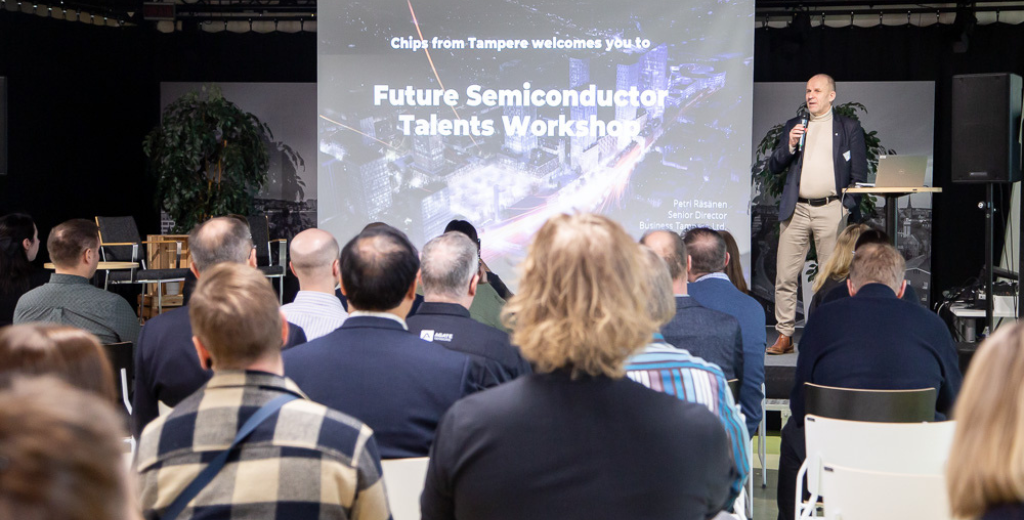
The event opened with welcoming words from Petri Räsänen, Senior Director at Business Tampere. He highlighted how Tampere currently ranks as Europe’s leading hub for semiconductor and chip innovation. He also introduced the Chips from Tampere programme, which drives several strategic goals, including talent development.
Pasi Pylväs, Director of FiCCC – Finnish Chips Competence Centre, noted that Finland now moves with strong momentum. The country has clear national direction, strong companies and a well-functioning ecosystem. He emphasised the need to strengthen connections across different sectors and highlighted that developing semiconductor talent is a strategic priority for both Finland and Europe. He also underlined that achieving this goal requires closer collaboration between public organisations and companies. He encouraged companies to communicate their talent needs, engage with students early and take an active role in building the future.
Hanna Riski, Senior Advisor at Work in Finland, presented the Find Your Superposition campaign, which helps Finnish companies attract top experts from the global talent pool. Companies can gain visibility on the campaign website through their open positions.
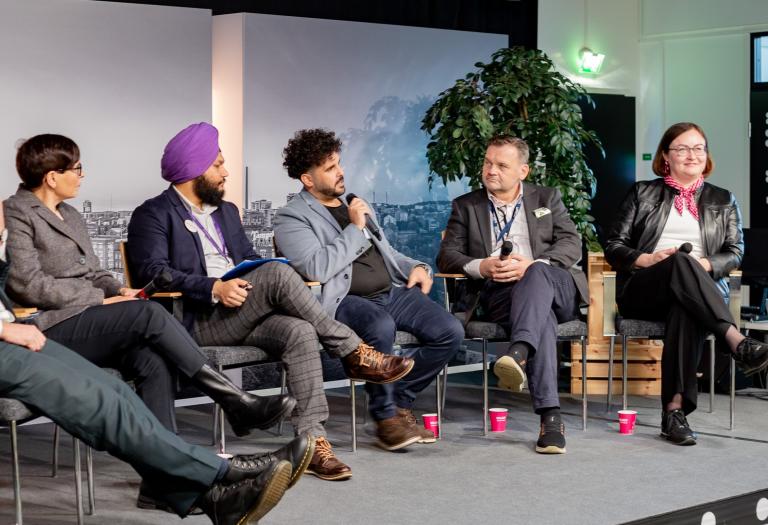
Victoria Cummings, Senior Manager at SEMI Europe, addressed the growing talent gap forecasted for the semiconductor industry. Some European countries produce a surplus of skilled professionals while others face shortages. The challenge remains complex, as the most immediate needs lie in senior-level expertise and developing such talent requires time. She highlighted that Europe needs talent from outside the EU, broader education opportunities within the EU and effective ways to upskill and reskill existing professionals. The academy builds a systematic approach to support these goals.
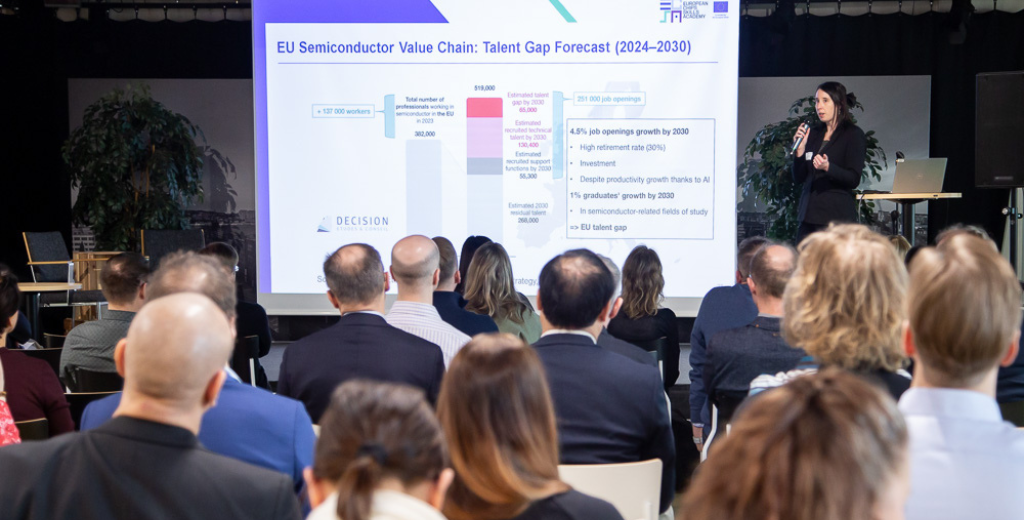
Sirpa Salmi, Skills & Talent at FiCCC, shared results from the recent company skills and talent needs survey. The semiconductor sector in Finland will require 20 000 employees by 2035. According to the survey, both local and national support play a crucial role for international talent arriving in Finland. She also outlined funding opportunities available for skills development.
Shared challenges and opportunities Identified in the workshops
Discussions across the five workshop groups highlighted several shared themes related to talent attraction and retention, as well as the need for clearer pathways and more consistent support from public organisations.
Companies of different sizes face different needs, which raises an important question about how education should be targeted. Participants stressed that semiconductor studies must become more visible, more attractive and easier to access. Stronger collaboration between companies and educational institutions emerged as a priority.
Participants emphasised the need to align academic curriculum with real industry requirements. Trainings and internships would give students a clearer understanding of the field and help companies hire both junior and senior talent more effectively. Many companies experience skill gaps in junior staff, so targeted training remains essential. At the same time, companies need senior experts, but educators often lack updated industry knowledge and senior professionals lack time to teach. This leaves a structural gap that requires coordinated solutions.
A recurring theme was Finland’s international visibility. Participants emphasised the need for stronger global visibility, more targeted talent attraction, and better coordination across the existing talent ecosystem. They also highlighted that relocation information flow and processes should be smoother and newcomers should receive more support throughout their integration
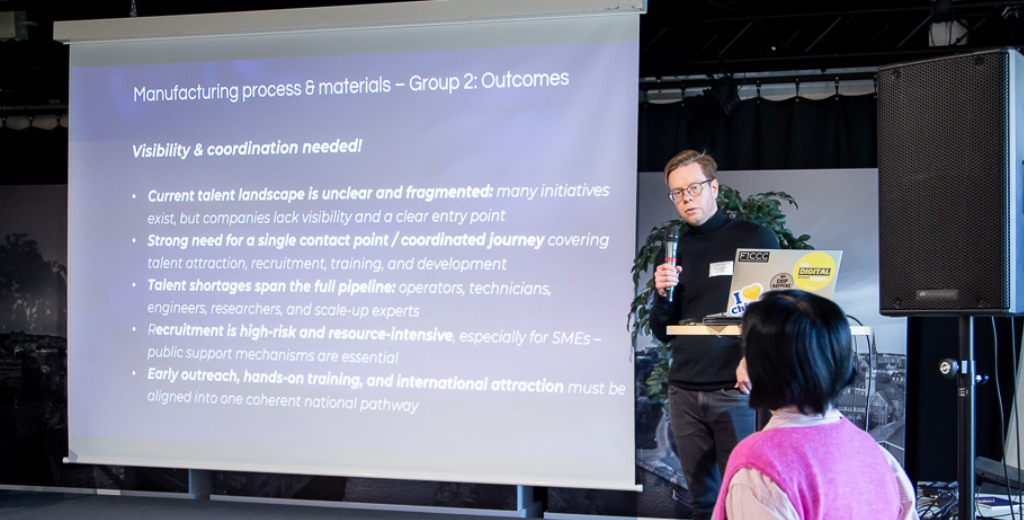
One suggestion that emerged from the group discussions was the need for a way to conduct initial talent pre‑screening already from outside Finland. This would help manage large applicant volumes and improve the quality of matches. Participants also emphasised that soft skills are just as important as technical expertise, especially when adapting to fast‑growing and international work environments.
Participants agreed that the industry benefits from a healthy mix of senior and junior professionals. Too many seniors slow renewal, and too few juniors slows growth. Broader communication about the semiconductor industry and a wider range of networking events would help strengthen the overall talent pipeline.
The final speaker, Hanna Osara, Vice President, People and Culture at Beneq, shared the company’s experiences in attracting talent. She explained that global experts apply to positions in Finland quite readily, but challenges emerge once contract negotiations begin. Salary levels compete poorly internationally; career paths remain limited and relocating an entire family involves structural obstacles. Finland often functions more as an entry point to the EU labour market than a long-term destination.
She stressed that recruitment alone will not expand the industry. Education must play a central role in any long-term talent strategy. Tackling these issues requires ecosystem thinking where cities, companies, universities and ecosystem platforms act together. The market will grow. The real question is whether Finland grows with it.
Moving forward building a long‑term talent strategy together
Nuppu Suvanto, Service Manager at International House Tampere, closed the event by thanking all participants for their valuable contributions. She informed attendees that both FiCCC and the national team will review all workshop materials and develop activities that align with the needs of the industry.
She also highlighted that many organisations already offer support and services for companies, encouraging participants to contact any member of the team for further information. As an example, she mentioned the Experience Tampere campaign, where companies can participate free of charge and receive a dedicated HR recruitment partner to actively headhunt potential talent. Successful candidates—and their families—are then invited to Tampere for a week to explore the city as a potential place to live and work